

What inside the car can be wrapped
Hard trim with a smooth surface wraps best: the inlays across the dash and doors, the console, the trim around the screen and vents, and the accent pieces on the steering wheel.
Some surfaces don't hold film well. Heavily textured plastic and soft-touch materials are poor candidates, and airbag covers should be left alone. We'll tell you which pieces in your car are good ones.
Why people wrap their interiors
Glossy piano-black trim scratches if you look at it wrong, and it's in every new car. Older cars have wood grain or silver plastic that dates the whole cabin. Wrapping fixes both without hunting for replacement parts.
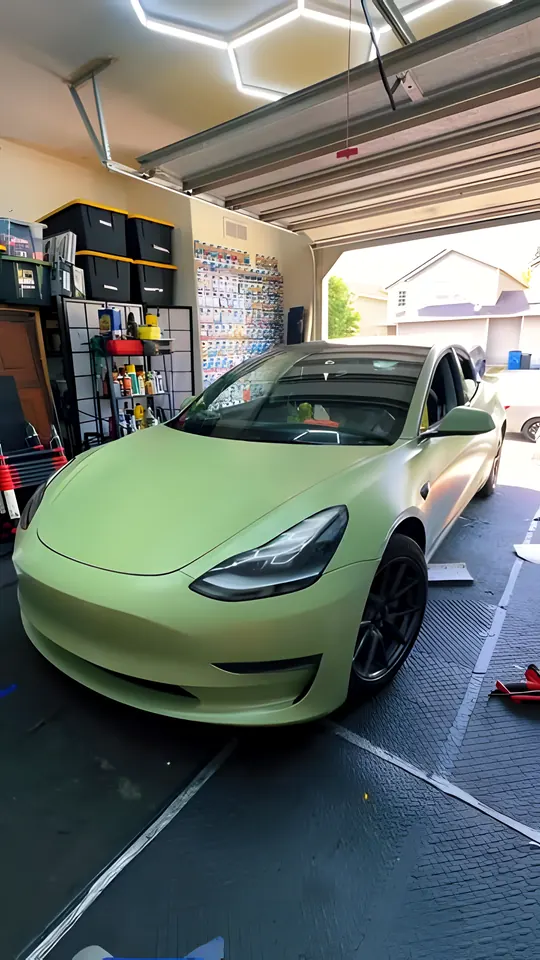
It's also the finishing move on a color change. A car wrapped in a bold color outside with matching or contrasting trim inside looks like it was built that way.
How it's done
Where pieces come out cleanly, we take them out and wrap them on the bench, so the film can wrap around the edges and the seams disappear. Pieces that can't come out are wrapped in place with careful trimming.
Interior film doesn't deal with weather, so it lasts well. Spots your hands touch all day, like the shifter surround and door pulls, wear fastest.
Popular interior looks
- Gloss piano black to satin black: same look, far fewer scratches and fingerprints.
- Color-matched trim: the inlays pick up your exterior wrap color.
- Contrast accents: one bold color on the dash and door inlays against a dark cabin.
- Wood grain or silver plastic covered in a modern solid color.
What changes the price
How many pieces, how complicated they are, and how many come out of the car. A few console pieces is a quick job; a full set of dash, door and console trim on a modern car is a bigger one. Send photos of the trim you want changed and we'll quote it.