

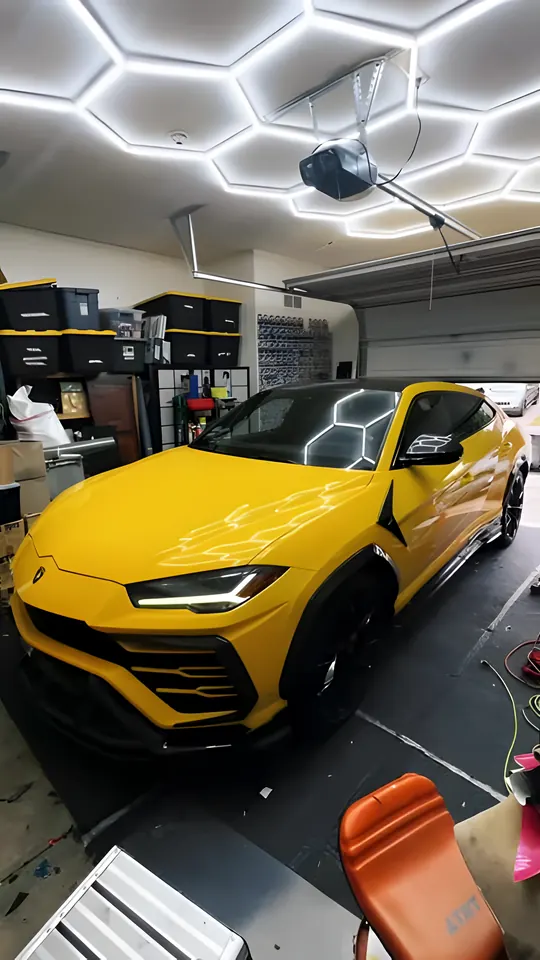
Gloss
Gloss film looks the most like paint. It's the easiest to wash, it's available in the widest range of colors, and it makes bright colors pop hardest. The E92 M3 went Evolve gloss green for exactly that reason.
It does show swirls and fine scratches the same way glossy paint does.
Satin
Satin sits between gloss and matte: a low sheen that traces every body line without mirror-like reflections. It's the go-to for blacked-out builds. The BMW X7 and the Lamborghini Urus both went 3M satin black.
Satin hides light swirls better than gloss and is easier to live with than matte. No wax, and use products made for satin or matte finishes.
Matte
Matte film has no shine at all. It's the most aggressive look and makes a car's shape read like a sculpture.
It's also the fussiest. Oils from hands and fuel drips mark it, waxes and gloss sprays leave blotches, and scrubbing can polish spots to a shine. Matte-specific soap and sealant, and a light touch, keep it right.
Matching the finish to the car
Cars with sharp creases and lots of angles tend to look best in satin, which picks out every edge. Smooth, rounded shapes often suit gloss, where reflections roll across the curves. Matte makes almost anything look aggressive, but it's the most work to keep clean.
How you use the car matters as much as how it looks. A daily driver that lives outside and gets quick washes is easiest in gloss. A weekend car that sleeps in a garage can wear satin or matte without the upkeep becoming a chore.
Specialty finishes
Beyond the big three there are color-shift films that change color as you walk around the car, chrome and brushed-metal films, metallic flakes, and textured films like carbon fiber looks. Specialty films usually cost more and some have shorter outdoor ratings. Ask us about a specific one.
Seeing it before you commit
Screens never show film the way it looks in daylight, and the same color reads very differently in gloss and satin. Ask to see a real sample of the film on the car before you book.